
Brass quintet — instruments, sound and uses
Two trumpets, French horn, trombone and tuba can sound like chamber music, a small orchestra or a powerful organ. Here is how that flexibility works.
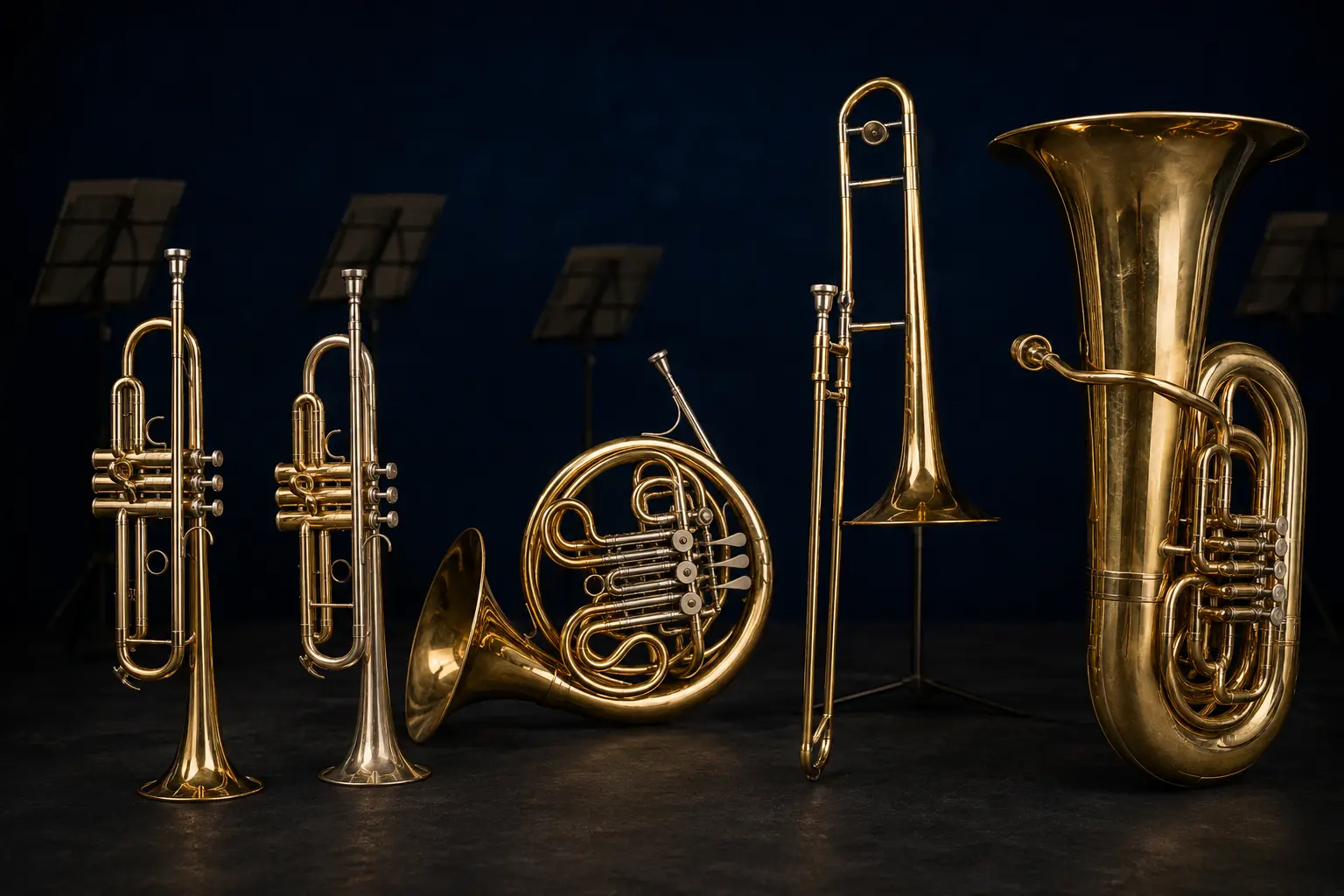
A brass quintet is one of the most flexible chamber ensembles. Five musicians can move from a quiet chorale to a fanfare, film music, carols or an outdoor programme because the family covers a wide range of pitch and colour.
Silver Brass has worked in this line-up since 2016 and creates most of its own arrangements, adapting the same five voices to very different spaces and audiences.
The standard line-up
The usual combination is two trumpets, French horn, tenor trombone and tuba. Each instrument has a natural register, but a strong arrangement does not lock it into one role.
- first trumpet — brilliance and upper register
- second trumpet — melody, harmony and answers
- French horn — the bridge between bright and dark colours
- trombone — tenor and bass lines, rhythm and counterpoint
- tuba — harmonic foundation and pulse
Why can five instruments sound so broad?
The range stretches from high trumpet to low tuba, while horn and trombone blend or contrast the middle voices. Mutes, articulation and the transfer of melody between instruments multiply the available colours.
Is a brass quintet always loud?
No. Brass instruments have a wide dynamic range. Excessive volume usually results from poor balance, inappropriate placement or an arrangement that ignores the room. A small church needs different projection than an outdoor stage.
Where does it work?
A quintet is compact enough for a presbytery or chamber hall yet can fill a large room without heavy production.
- classical and chamber concerts
- weddings and church ceremonies
- Christmas, Lenten and commemorative programmes
- galas and civic events
- education and workshops
- outdoor entertainment
Quintet, brass band or wind orchestra?
A quintet has five independent voices. A brass band uses larger brass sections and percussion; a wind orchestra adds woodwinds. Each format serves different repertoire and spaces rather than being a better or worse version of the others.
How to choose a quintet
Check live recordings, relevant experience, exact line-up, custom arrangements, rehearsals, travel and technical planning. Professional musicians should also be able to explain what will not work in a particular venue.