
How to organise a concert in a church — a practical plan
Acoustics, permissions, repertoire, lighting, production and the parish’s needs: a complete checklist for a professional concert that respects its setting.
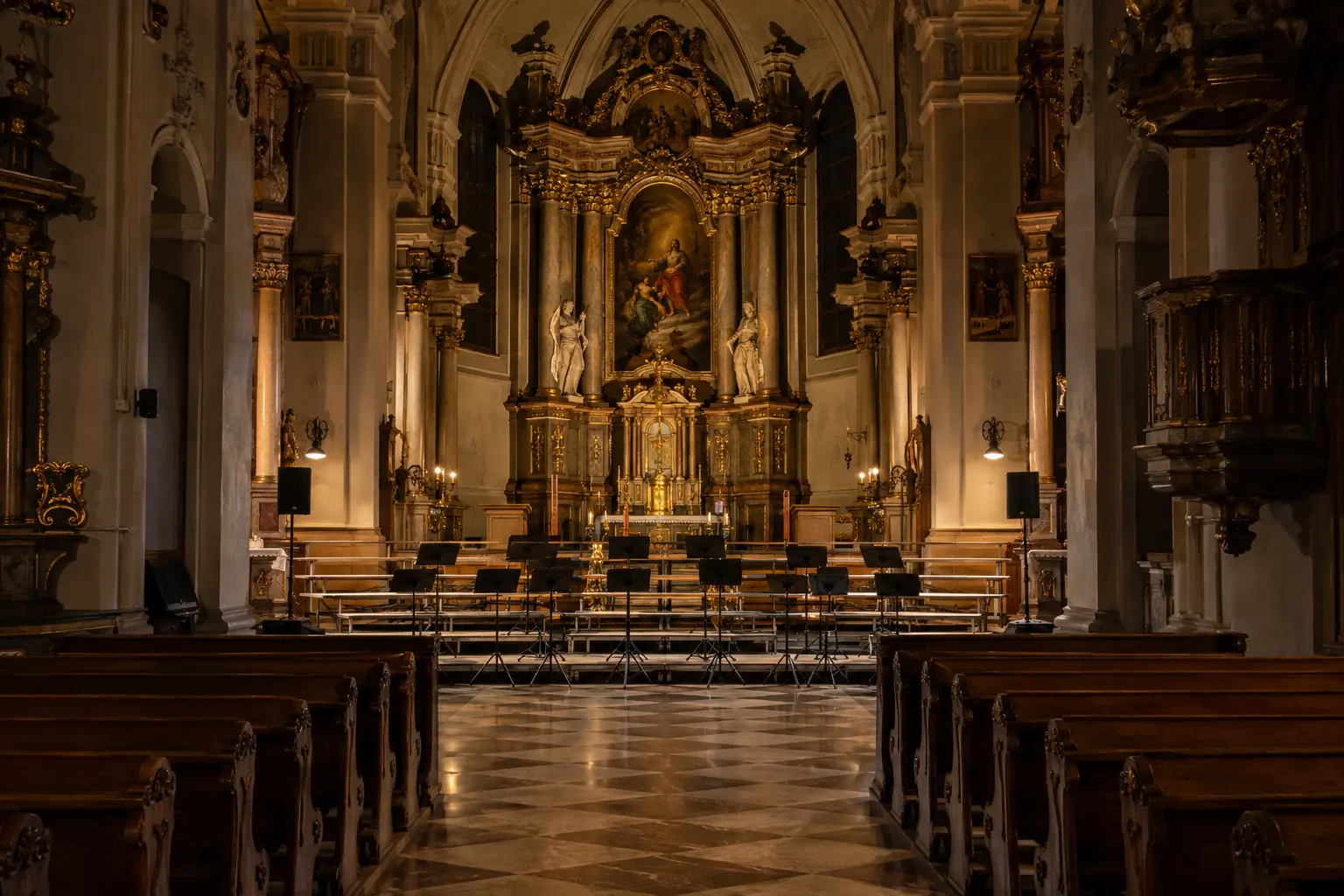
A church can offer extraordinary acoustics and atmosphere, but it remains a place of worship. The programme, technical setup and communication must respect both the architecture and the daily life of the parish.
This plan is based on Silver Brass productions ranging from small ceremonies to concerts with choir, organ, timpani, sound and architectural lighting.
1. Define the purpose and audience
Decide whether the concert is artistic, commemorative, charitable or seasonal. The answer determines repertoire, duration, funding and promotion. A programme for families requires a different rhythm from a complete classical work.
2. Agree the conditions with the parish
Confirm access hours, services taking place that day, changing rooms, equipment storage, invoicing, ticketing and responsibility for closing and cleaning the building. Put the key arrangements in writing.
3. Inspect the venue
Measure the presbytery, check stairs, doors, transport routes, electricity, cable paths and the position of the sound engineer. A short acoustic test will reveal whether speech and fast music need reinforcement or a different setup.
4. Calculate the full budget
Include arrangements, rehearsals, sound, lighting, technicians, travel, accommodation, rights, promotion, insurance and contingency. A smaller, properly produced line-up often works better than a large ensemble without adequate technical support.
5. Use technology with restraint
Sound should improve clarity, not simply volume. Lighting may reveal architecture and musical drama without turning the presbytery into a club stage. Haze, moving lights and intense colours always require explicit approval.
6. Build a realistic schedule
Work backwards from doors opening: load-in, setup, tuning, soundcheck, lighting check, musical rehearsal, meal and audience access all need their own time.
- secure all cables and public routes
- test speech microphones separately
- rehearse difficult transitions rather than the full programme
- allow time for dismantling and handing the church back
Before announcing the concert
Do not publish a date until the organiser, venue, programme, budget, access rules, production plan and public admission conditions are confirmed.